Ray Chen's profile picture

Ray Chen

Ph.D. Student in Computer Science

University of Florida

About Me

I am a Ph.D. student in Computer Science at the University of Florida. My research lies at the intersection of fairness-aware machine learning, human-in-the-loop ML, interpretable AI, and trustworthy AI. I develop residual-based metrics and interactive visualization systems to diagnose hidden disparities in models—including LLMs—particularly under distribution shift and in spatiotemporal data settings. The broader objective is to provide distribution-level, human-centered diagnostics that make AI systems more transparent, accountable, and reliable in high-stakes applications.


Research Interests

  • Interactive AI/ML

  • Interpretable AI

  • Human-in-the-Loop ML

Education

  • Ph.D. in Computer Science (Expected May 2029)

    University of Florida, Gainesville

  • MS in Electrical and Computer Engineering

    University of Washington, Seattle

  • BS in Physics and Astronomy

    The Ohio State University, Columbus

Academic Experience

Research Assistant (LLM & Interactive AI)

University of Florida, Dept. of Computer & Information Science & Engineering

Aug 2024 – Present · Gainesville, FL

  • Built end-to-end evaluation pipelines in PyTorch for transformer and multimodal models, covering data ingestion, experiment configuration, large-scale inference, and automated metric reporting.
  • Developed slice-based and distributional diagnostics to analyze model behavior beyond aggregate metrics, helping prioritize areas for deeper investigation and follow-up experiments.
  • Converted high-level research goals into reproducible evaluation workflows, defining baselines and controlled experiments to systematically assess model behavior.
  • Executed distributed inference and evaluation workloads on a SLURM-managed GPU cluster, coordinating parallel runs across nodes while improving reproducibility and benchmarking reliability.
  • Advisor: Professor Christan Grant

Teaching Assistant: CIS 4930 Intro to ML

University of Florida

Jun 2025 – Aug 2025 · Gainesville, FL

  • Mentored students on ML fundamentals, neural network architectures, and Python implementation best practices.

Graduate Grader

University of Washington

Sep 2023 – Dec 2023 · Seattle, WA

  • Served as a grader for EE 215, evaluating homework assignments with consistency and accuracy.
  • Designed detailed grading rubrics to ensure fairness and clarity in evaluation.
  • Provided guidance and support by addressing student questions regarding homework assignments.
  • Answer the questions regraing to the homework assignmebntrs
  • Served courses: EE 215: Fundamentals of Electrical Engineering.

Undergraduate Teaching Assistant

The Ohio State University

Jan 2022 – May 2022 · Columbus, OH

  • Created and evaluated Python data analysis exercises for a class of 60 students, focusing on enhancing their data analysis and visualization skills in astronomy.
  • Attended assigned class and lab session to assist students in their development of basic skills in laboratories and lectures.
  • Graded assignments, hold office hours, and conducted review sessions to help students prepare for exams.
  • Coordinated the class schedule and resolved academic misconduct conflicts. Developed rubrics for NumPy assignments to ensure fair evaluation and grading consistency.
  • Served courses: Astronomy 1221: Astronomy Data Analysis and Visualization.

Undergraduate Research Assistant

The Ohio State University

June 2021 – May 2022 · Columbus, OH

  • The project is about the Pulsar Timing Analysis
  • Collaborated with a team to investigate pulsar timing and its application in detecting anomalies in pulsation periods caused by orbiting bodies.
  • Derived and implemented mathematical expressions for changes in radio pulse arrival times using orbital mechanics and pulsar timing models.
  • Designed and developed a Python-based computational notebook allowing users to simulate artificial pulse timing data for pulsar systems.
  • Incorporated instructional elements, background reading links, and visualization tools for educational purposes.
  • Advsior: Professor Donald Terndrup

Selected Projects

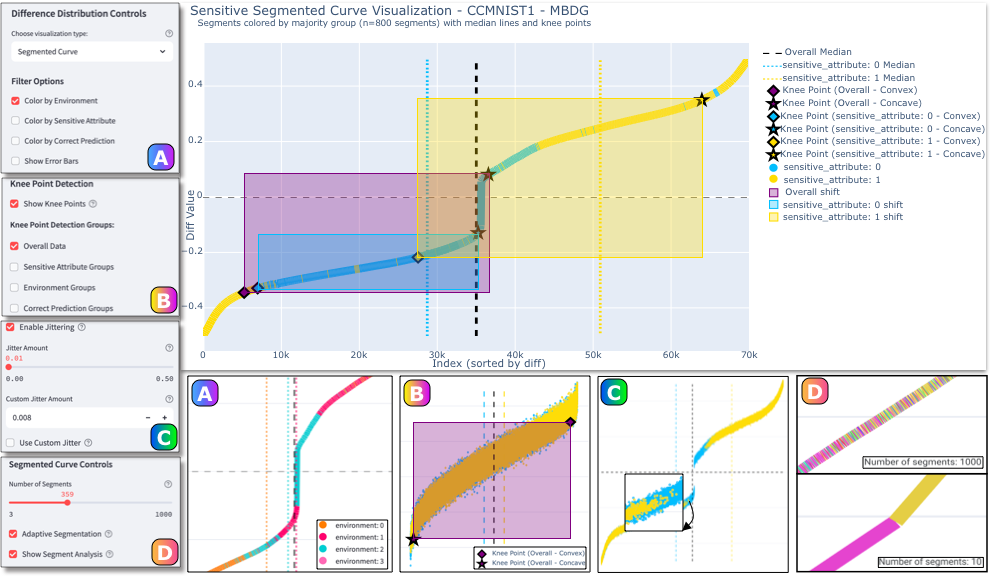
RISE: An Interactive Tool for Visual Diagnosis of Fairness in Machine Learning Models

Our system integrates three residual-based indicators to visually expose fairness–accuracy trade-offs that conventional metrics often miss. By plotting sorted residual curves and highlighting median shifts and knee-point asymmetries, the tool enables perception-driven debugging of group disparities.

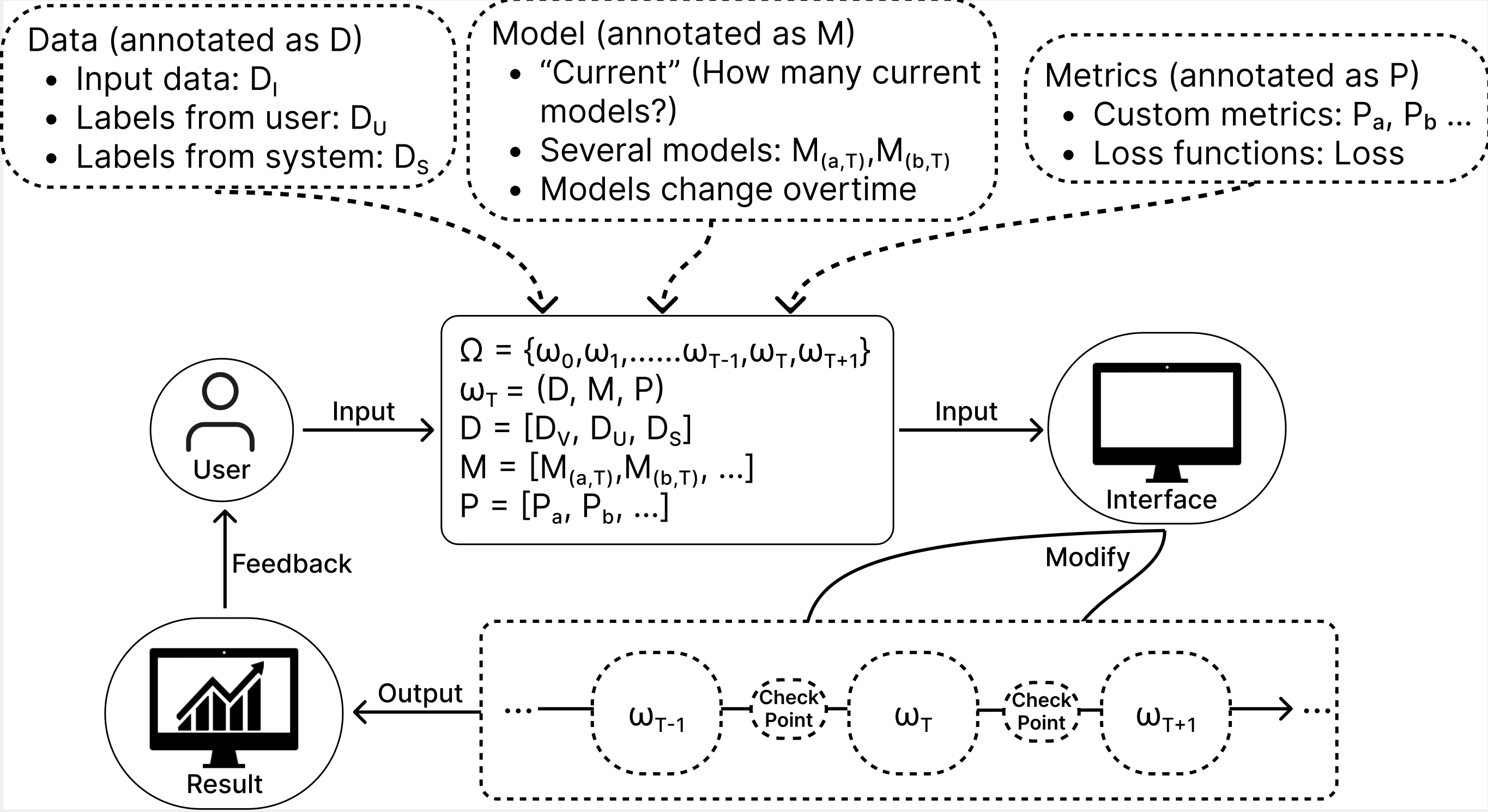
[Ongoing] Fair AI interface

Enable users to visualize the fairness of classifiers on video data in real-time by simultaneously adjusting various parameters.

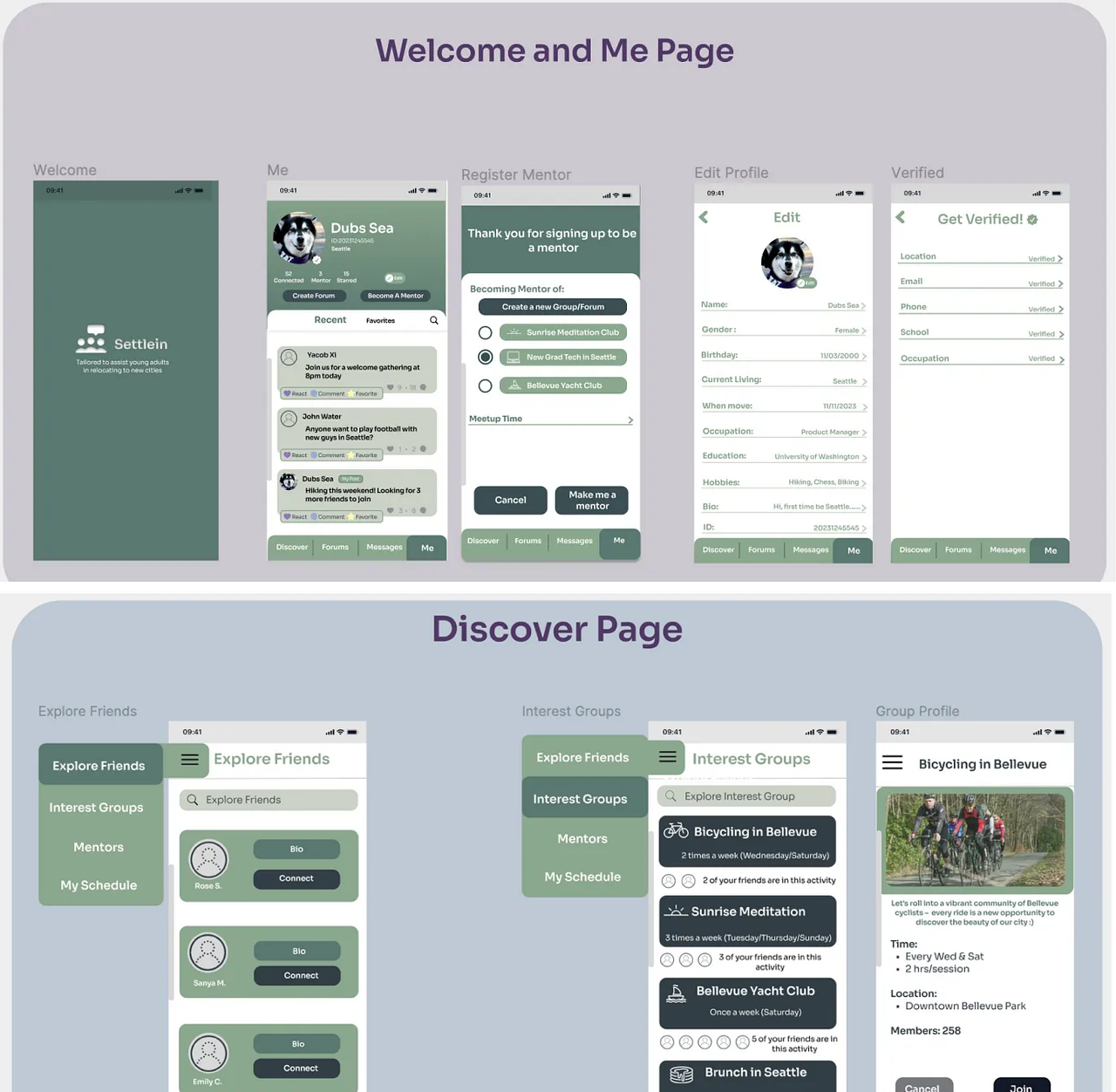
'SettleIn' mobile app: Alleviating the challenges faced by young adults relocating to new areas.

We began with a thorough design research plan, conducted user research to understand needs, and performed a detailed task analysis to refine key functionalities. Insights from user research guided our initial sketches and storyboards, which were tested and iterated through paper prototyping. We then transitioned to digital prototypes to validate the user experience, culminating in a final presentation and poster showcasing the project's evolution.

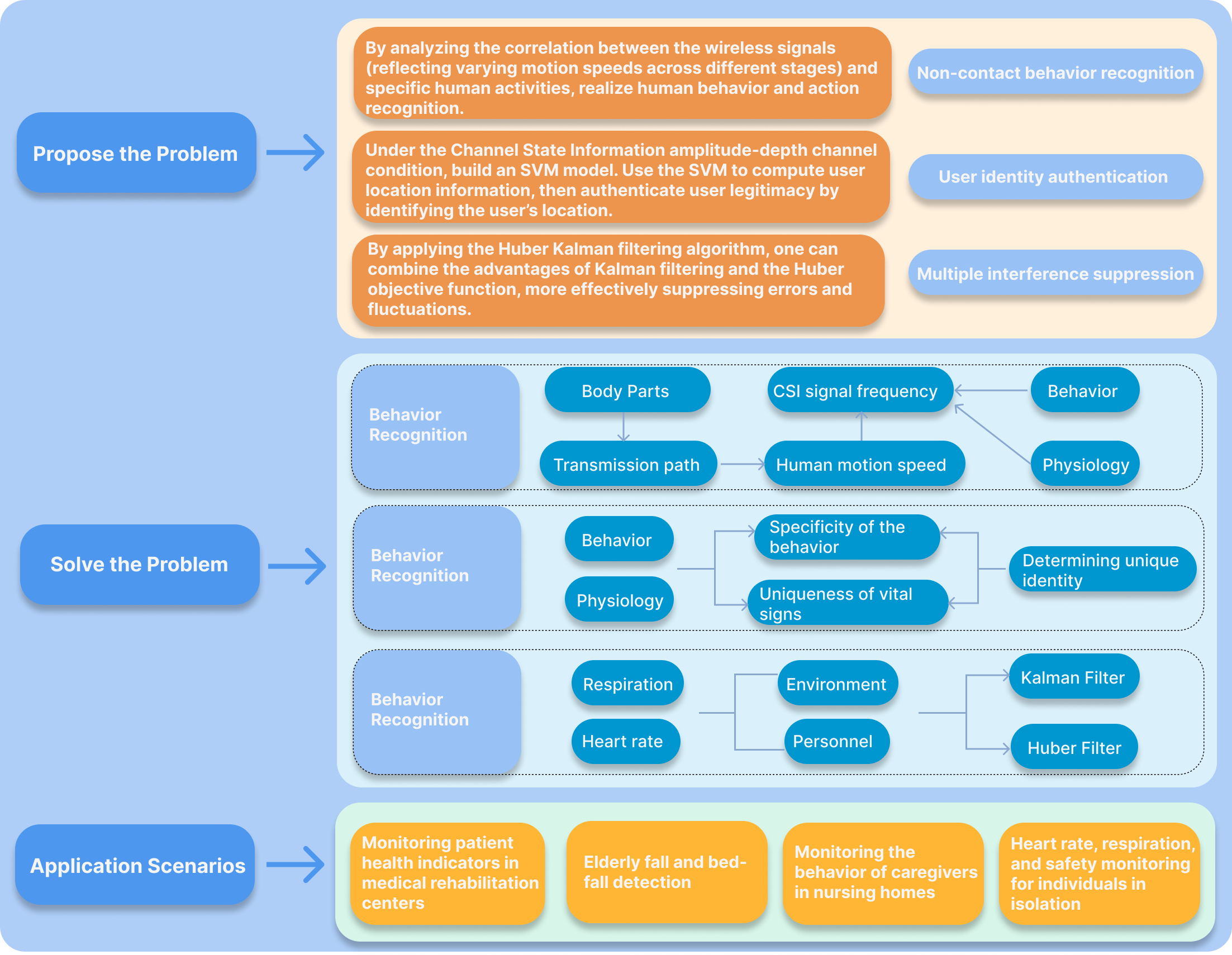
Health monitoring system based on wireless perception

Developed non-contact wireless sensing technologies leveraging Wi-Fi and CSI analysis for behavior recognition and identity authentication. Designed algorithms for motion detection, noise reduction, and physiological signal monitoring using advanced techniques like Hampel filtering and SVM modeling. Contributed to a multi-signal sensing platform integrating UWB, Wi-Fi, and millimeter-wave signals for accurate indoor positioning and behavior monitoring.

Resulted in Patent CN116313093A, enabling applications in elderly fall detection, healthcare monitoring, and secure access systems.

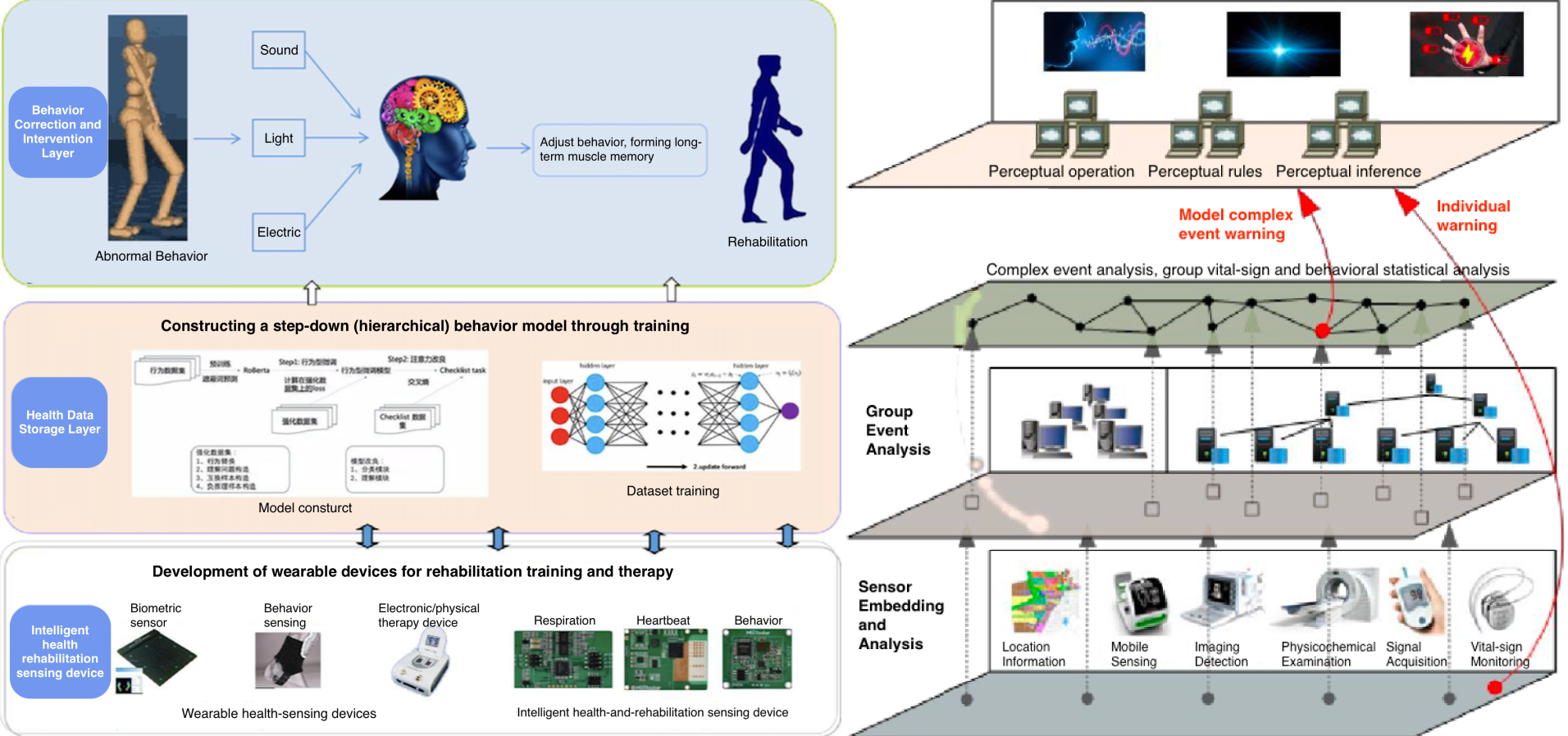
Real-time Health Assessment and Early Warning Method Based on Perceptual Sampling Data

Developed intelligent wearable devices and wireless sensing systems for behavior correction and rehabilitation therapy, focusing on non-contact sensing, data transmission, and personalized health monitoring. Integrated edge-cloud computing for real-time data analysis, enabling precise monitoring of vital signs and behavior.

Resulted in Patent CN116386840A, with applications in rehabilitation for cerebral palsy patients, elderly care, and personalized healthcare systems.

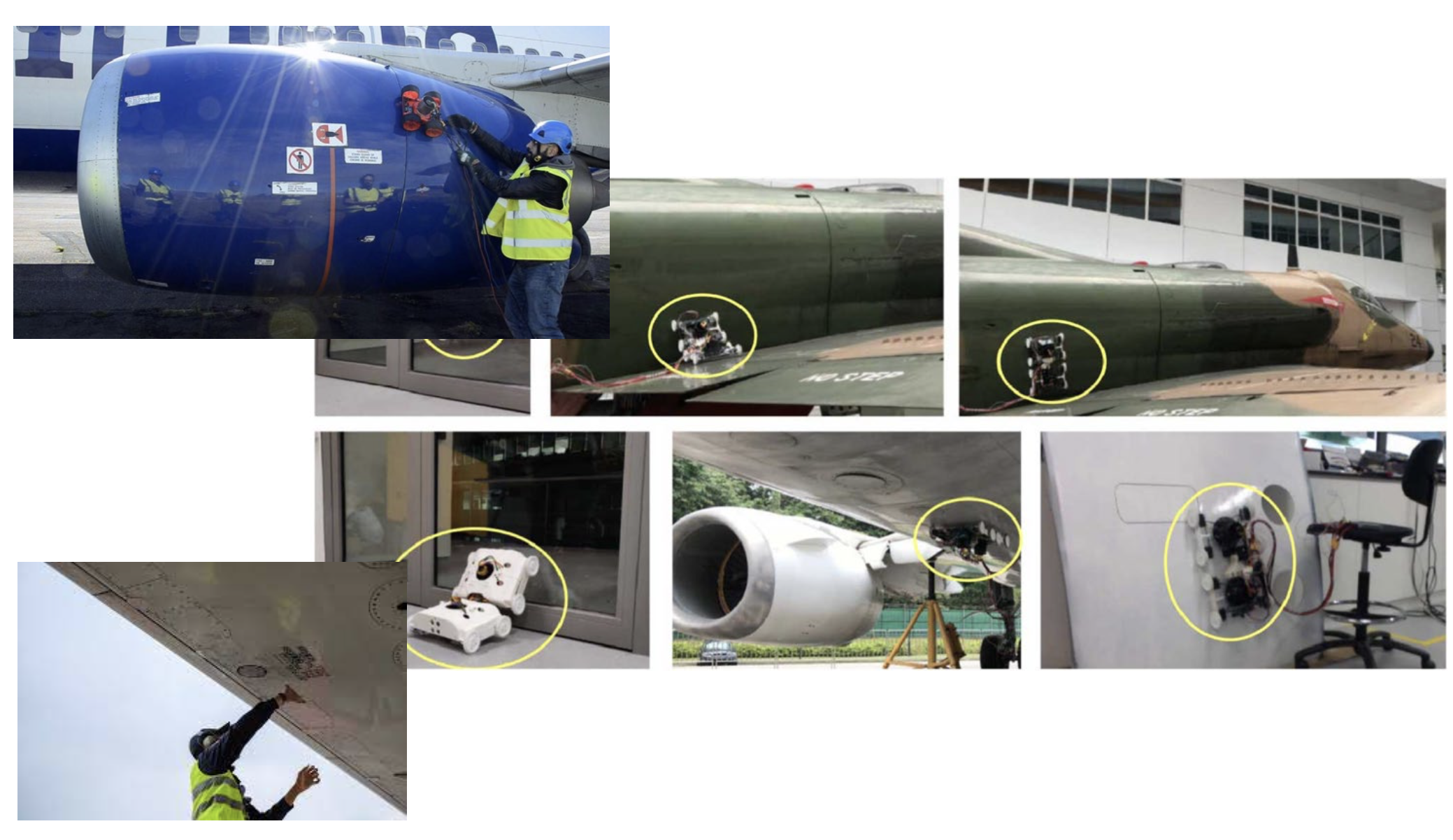
Robotic Fuselage Inspection for Dents and Scratches sponsored by Airbus

The Robotic Fuselage Inspection project, sponsored by Airbus Robotics, aimed to automate and enhance the manual inspection of fuselage surfaces for defects like dents and scratches. Using a Fanuc CRX-20iA/L robotic arm, Intel RealSense camera, and a trained Inception V3 model (98.5% accuracy), the team captured and classified defect images, integrating the results into an AR application for precise defect visualization on 3D models. Simulated in ROBOGUIDE, the robotic arm's optimized scanning path enabled efficient panel coverage, while the AR app anchored and marked defect locations. This system significantly reduces inspection time, improving accuracy and scalability for future advancements.

Advisor: Professor Payman Arabshahi, Professor John Raiti

Industry Experience

Software Engineer Intern

Airbus Robotics

Jan 2023 – Jun 2023 · Seattle, WA

  • Built production-grade data pipelines supporting ML-based inspection workflows on large-scale 3D sensing and scanning data.
  • Worked with 3D reconstruction, scanning, and AR-related systems, bridging research prototypes with deployed engineering solutions.
  • Collaborated cross-functionally to deliver ML-enabled 3D perception features under real-world system constraints.

Electrical Design Engineer Intern

State Grid NARI Group Corporation

May 2021 – Jul 2021 · Nanking, Jiangsu

Software & Automation Engineering Intern

NR Electric Co., Ltd

May 2021 – Aug 2021 · Nanjing, China

  • Developed automation software (C++) to monitor low-voltage CPU/PLC testing pipelines, enabling continuous unattended execution and reducing manual intervention by 30%.

Publications

External Service